PPWR: New Rules for Packaging and Packaging Waste

For businesses, the exact obligations depend on their role and the packaging they place on or handle in the EU market. But there is also a practical question that applies far beyond compliance: what happens to packaging once it becomes waste?
Cardboard boxes, plastic film and other packaging materials still need to be sorted, moved, stored and prepared for collection or recycling. For retailers, warehouses, distribution centres and production facilities, that makes packaging waste management an everyday operational issue as well as part of a wider European packaging conversation.
PPWR in one sentence
What is PPWR?
The regulation replaces the previous EU Packaging and Packaging Waste Directive and creates a more harmonised framework for packaging across the EU. It covers packaging and packaging waste regardless of material or origin and addresses the full packaging life cycle, including manufacturing, composition, use, reuse, labelling and waste management.
What are the main PPWR requirements?
PPWR includes many detailed obligations and exemptions, so the effect on a particular company depends on its products, packaging formats, and its role in the value chain. At a general level, the regulation focuses on the following areas:
Less unnecessary packagingPackaging must increasingly be designed to reduce unnecessary weight and volume while still maintaining its functionality. From 2030, extra rules will also address excessive empty space in certain grouped, transport, and e-commerce packaging.
More recyclable packaging
Recyclability performance grades will apply from 2030. An additional requirement that packaging must be recyclable at scale will apply from 2035, with stricter obligations coming in later.
More recycled content in plastic packaging
Certain plastic packaging must include minimum levels of post-consumer recycled content. The required levels and exemptions will differ depending on the packaging type and application.
More reuse and refill
PPWR brings in reuse and refill measures for selected packaging formats and sectors, along with requirements for systems that support collection and reuse.
Clearer sorting and labelling
The regulation introduces harmonised labelling and identification measures designed to make packaging composition and sorting instructions easier to understand across the EU.
When did PPWR start to apply?
PPWR came into force on 11 February 2025 and has generally applied since 12 August 2026. However, many specific requirements have later application dates, including key recyclability, recycled-content, reuse and packaging-minimisation obligations.
In practice, PPWR should therefore be seen as a multi-year implementation framework rather than a single deadline.
What does PPWR mean for businesses?
Businesses should therefore identify their role in the packaging value chain and assess which requirements apply to their specific packaging and operations. PPWR is a regulatory framework, and companies may need specialist legal or compliance advice when interpreting their individual obligations.
At the same time, PPWR reflects a broader shift: packaging – and what happens to packaging after use – is getting more attention across Europe.
What happens when packaging becomes waste?
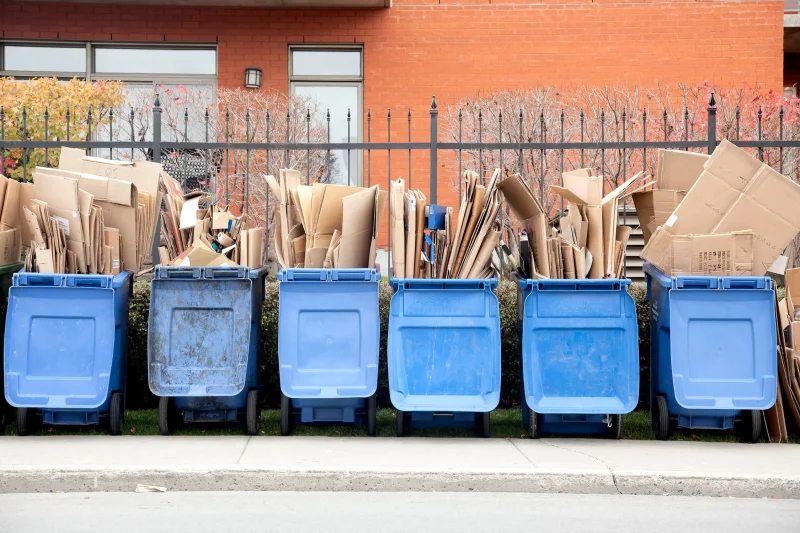
In a retail shop, this might mean cardboard produced in the stockroom throughout the day. In a warehouse or distribution centre, it can mean large and ongoing volumes of cardboard and plastic film. In manufacturing, packaging waste may be produced at several points across the facility.
Loose packaging waste can take up valuable floor and storage space, create extra internal movements and make collection areas harder to manage. That’s why the operational handling of packaging waste deserves attention in its own right.
Please note
A baler or compactor does not make a business PPWR compliant. PPWR covers the packaging life cycle and includes obligations far beyond operational waste handling. Bramidan’s expertise is the efficient handling of recyclable materials after they become waste.
How can businesses improve packaging waste handling?
Efficient packaging waste management begins with understanding where waste is generated, what materials are involved, and how they move through the operation before collection. Four areas are especially useful to review:
1. Sort materials at source
Separating cardboard, plastic film, and other recyclable materials where they are generated can make downstream handling easier and create cleaner material streams. A practical sorting setup should be straightforward for employees to use as part of their normal workflow.
2. Reduce the volume of bulky packaging waste
Loose cardboard and plastic film contain a lot of air and can quickly take up floor and storage space. Compacting suitable materials can reduce the physical volume that needs to be handled and stored.
3. Improve the internal waste flow
Consider where packaging waste is generated, where employees bring it, and how often it is moved. Placing suitable waste-handling equipment close to the source can cut down on unnecessary internal transport and make daily routines simpler.
4. Prepare materials efficiently for collection
Sorted and compacted recyclable materials are easier to organise and store while waiting for collection. The right solution depends on the type of material, volume, available space, and how the individual operation works.
Where does Bramidan fit in?
We help businesses handle recyclable waste streams such as cardboard and plastic more efficiently after the materials have become waste.
Bramidan balers and compactors are used in retail, warehouses, distribution centres, logistics and manufacturing operations where packaging materials are a recurring part of the daily waste stream.
Depending on the operation and material, compacting packaging waste can help businesses:
• reduce the volume of cardboard and plastic waste
• make better use of floor and storage space
• reduce internal handling of loose waste
• create more organised recyclable material streams
• make materials easier to store and prepare for collection
The right waste-handling solution should always be based on the materials, volumes, available space and workflow of the individual business.
PPWR puts packaging in focus. What happens afterwards matters as well.
For businesses, understanding and complying with the regulatory requirements that apply to their packaging is one part of the picture. Dealing with the cardboard, plastic film, and other packaging materials produced in daily operations is another.
That second challenge is where Bramidan can help: providing a more efficient way to handle recyclable packaging waste from the moment it is generated until it is ready for collection.
Want to improve your packaging waste handling?
Explore Bramidan solutions for cardboard, plastic and other recyclable waste streams.
Any Questions? Get in touch